Guides / Flying with pets
Alaska Airlines pet policy 2026: big dogs, the cabin, and the short-nosed breed rules
Alaska still checks pets in the baggage compartment for any passenger, up to 150 lb with the kennel, which makes it one of the few options for a large dog. This guide covers the cabin, the baggage compartment, and the short-nosed breed rules on Alaska and its Pet Connect cargo service.
Flying with pets · Published · Last checked
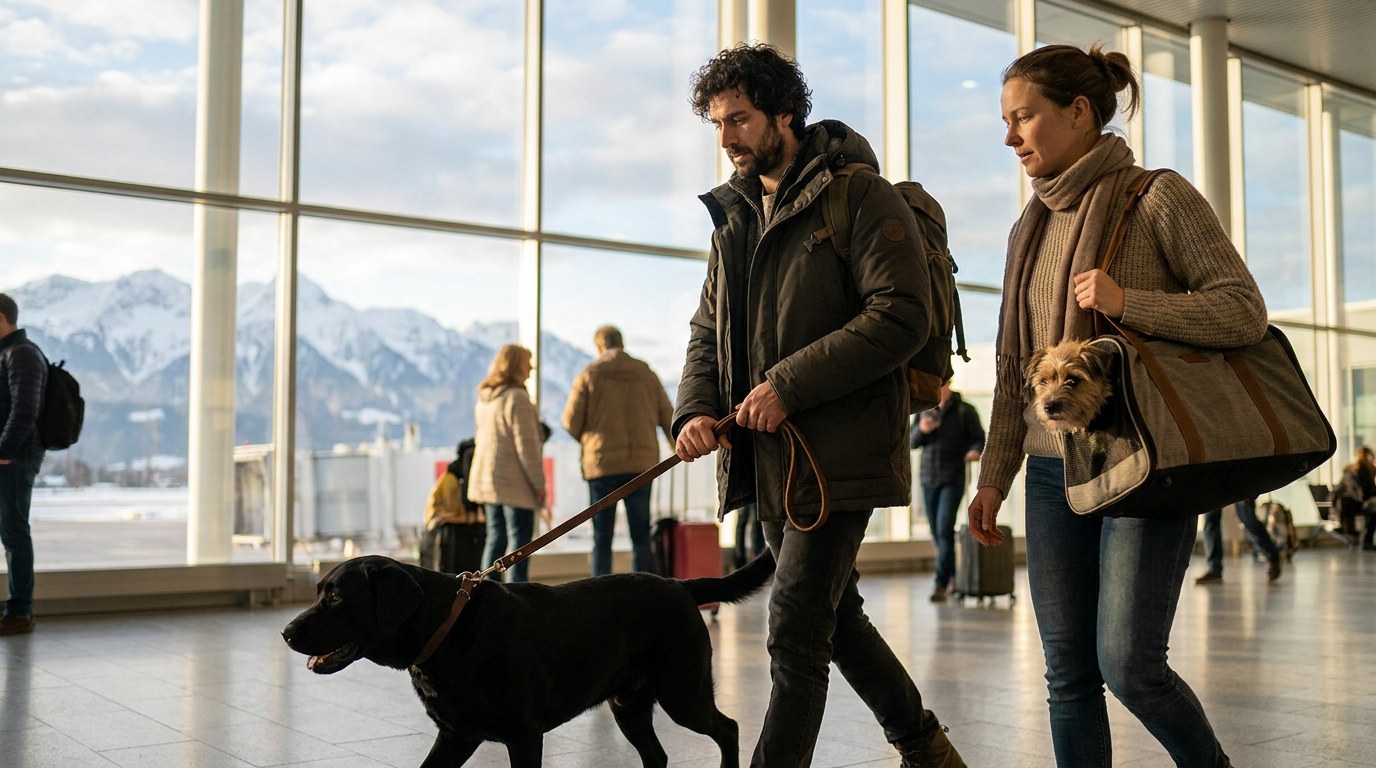
WayFur answer
Yes, you can fly a large dog on Alaska Airlines: Alaska accepts dogs in its baggage compartment for $200 each way per kennel, as long as the dog and a hard-sided kennel together weigh no more than 150 lb. Small dogs and cats can fly in the cabin for $100 each way in a soft-sided carrier no larger than 17 x 11 x 9.5 in, with no published weight limit. Short-nosed breeds such as French Bulldogs and Pugs are kept out of the baggage compartment on almost every route, but may fly in the cabin.
Flying with a large dog on Alaska Airlines
Say you live in Seattle and you are heading to Anchorage for the winter with two dogs: Juno, a 65 lb Labrador, and Pip, a 9 lb French Bulldog. They will travel in different parts of the plane, under different rules.
Juno is too big for the cabin, so she goes in the baggage compartment. Alaska charges $200 each way per kennel, or $100 for travel wholly within the State of Alaska. Your trip from Seattle is not wholly within Alaska, so plan on $200. Pet and kennel together can weigh up to 150 lb. Over that, Alaska sends you to its Pet Connect cargo service.
The kennel has to be hard-sided, with a solid roof, a metal grated door, and room for your dog to stand without her ears touching the top. Alaska accepts five sizes, from extra small at 21 x 16 x 15 in to extra large at 40 x 27 x 30 in.
Easy to miss
Soft-sided, collapsible, wicker and wire-mesh kennels are refused in the baggage compartment, and kennels over 28 in are not allowed on flights within Hawaii.
On the day, check in no more than 2 hours before departure and no later than 90 minutes before, which is Alaska's acceptance cut-off. You need a health certificate from a licensed vet for each pet in the baggage compartment, dated within 10 days of your outbound flight and within 30 days of a return on the same ticket. Alaska also asks you to offer food and water within 4 hours of check-in and sign a record saying you did.
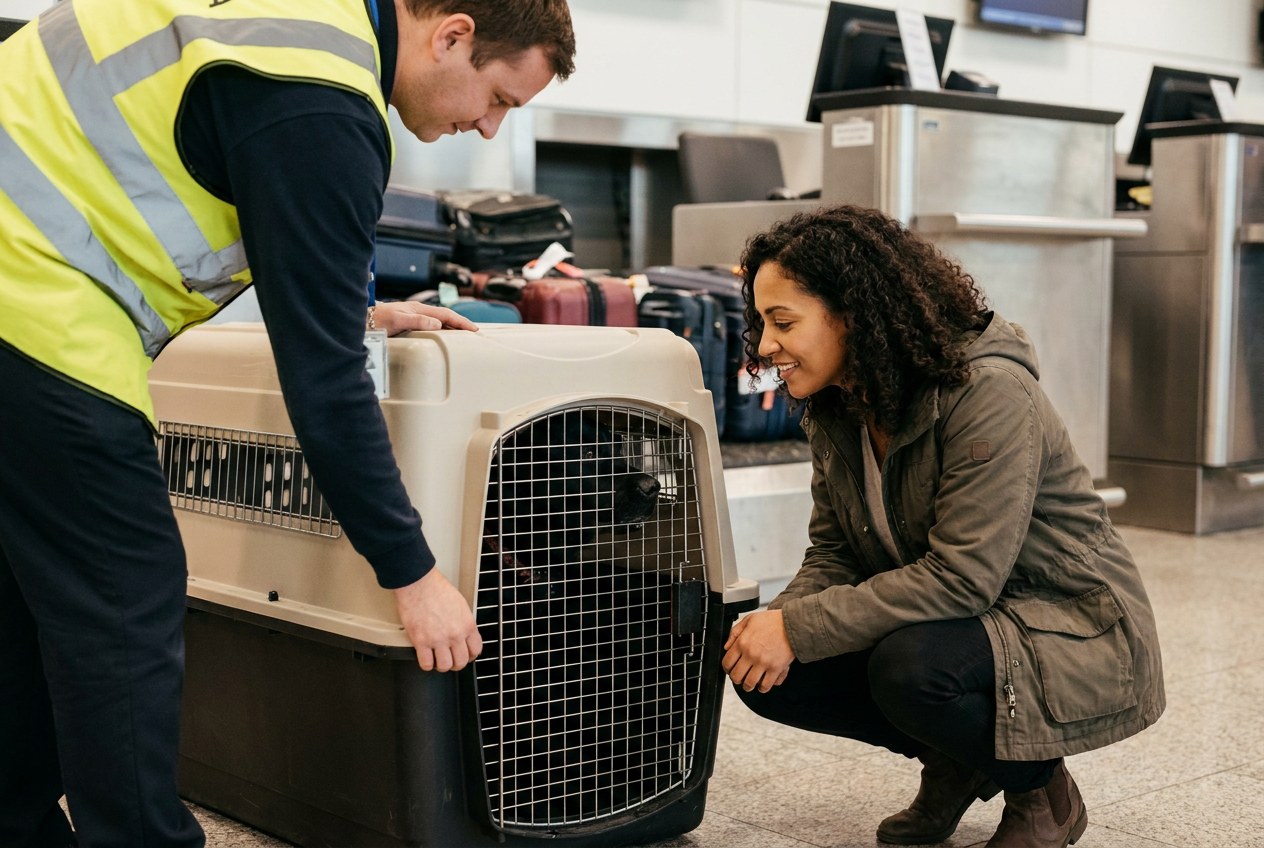
Alaska Airlines pets in the cabin
Pip is small enough for the cabin. Alaska accepts small dogs, house cats, domesticated rabbits and small household birds there, for $100 each way per carrier, or $35 wholly within Hawaii.
The carrier must be soft-sided, no larger than 17 x 11 x 9.5 in, and fit under the seat in front of you. Hard-sided kennels are not allowed in the cabin, and Alaska does not publish a weight limit. Up to two pets of the same species and similar size can share one carrier, and you can bring a second carrier if you buy the seat next to you.
Easy to miss
A few cabin rules catch people out. You must be at least 18, or travel with someone who is. The carrier counts toward your carry-on allowance, so you can bring it plus either a personal item or a standard carry-on bag. No exit or bulkhead rows, and Business Class on Alaska's A330 and 787 cannot take a pet carrier. Space is first come, first served, so reserve before the day of travel by chatting with an agent. Pets must be at least eight weeks old and weaned.
Short-nosed breeds on Alaska and Pet Connect
Pip's breed is the reason she has to fly in the cabin. Alaska's baggage compartment page says brachycephalic dogs and cats are not accepted there, and lists the breeds, including the French Bulldog, Pug, Boston Terrier, Boxer, Shih Tzu, Pekingese, all mastiffs, and Persian and Himalayan cats. They may still travel in the cabin if the carrier fits under the seat.
The same breeds are refused by Alaska Air Cargo's Pet Connect, the service for pets travelling without a passenger and pets that weigh more than 150 lb with the kennel. Its restrictions page says short-nosed dogs and cats, and mixed breeds of the listed types, are not accepted in the cargo compartment, and points them to the cabin with their passenger. Pet Connect may also refuse a pet when the forecast at acceptance is above 85°F (29.5°C) or below 45°F (7°C) at any point on the itinerary, and a vet's acclimation certificate can allow a cold-weather exception.
Bully breeds, destinations and other limits
Alaska's pages contradict each other on bully breeds. The baggage compartment page says bull terriers, pit bulls and Staffordshire terriers are accepted there, yet the same page lists the Staffordshire Bull Terrier among the short-nosed breeds it will not carry, and Alaska's pets FAQ lists the American Pit Bull Terrier, American Staffordshire Terrier, Bull Terrier and Staffordshire Bull Terrier among the breeds kept out of the baggage compartment. If you have a bully breed, confirm with Alaska, in writing if you can, before the trip.
Alaska does not accept pets in the cabin or baggage compartment to or from Europe, London Heathrow, Japan, Seoul, Belize City, Guatemala City, Pago Pago, Papeete, Rarotonga or Sydney, with a limited baggage compartment exception for active-duty military on some Japan routes.
Practical tip
Pets in the baggage compartment are not transferred to other airlines. On a connection to another carrier you collect your dog at baggage claim and check her in again, which Alaska says needs at least 4 hours between flights.
Where this comes from
Every rule above comes from Alaska's Pets in Cabin, Pets in Baggage Compartment and pets FAQ pages and Alaska Air Cargo's Pet Connect restrictions page, read on 6 October 2026 (the baggage compartment page again on 11 October 2026), and matches WayFur's Alaska policy record refreshed on 9 October 2026. Alaska's pet pages change, so recheck close to your date if your pet is flying in the baggage compartment.
If your trip goes to Hawaii or crosses a border, between the US and Canada or Mexico for example, put in your route, travel date and each pet's breed, weight and age. A free readiness check lists what each pet needs to arrive, plus any breed law where the trip starts and ends, with the source behind each requirement and when it was last verified. Confirm the cabin and baggage compartment rules on Alaska's own pages, linked above, before you book.
Sources
- Alaska Airlines: Pets in Baggage Compartment
- Alaska Airlines: Pets in Cabin
- Alaska Airlines: Pets FAQ (product source_url)
- Alaska Air Cargo: Pet Connect restrictions
Common questions
Can I fly my large dog on Alaska Airlines?
Yes, in the baggage compartment, as long as your dog and a hard-sided kennel together weigh 150 lb or less. The fee is $200 each way per kennel, or $100 wholly within Alaska. Heavier pets go through Alaska Air Cargo's Pet Connect service.
How much is the Alaska Airlines pet fee?
In the cabin, $100 each way per carrier, or $35 for travel wholly within Hawaii. In the baggage compartment, $200 each way per kennel, $100 wholly within Alaska or for active-duty military, and $60 wholly within Hawaii. Another airline on the same itinerary may charge its own fee.
What size pet carrier does Alaska Airlines allow?
In the cabin, a soft-sided carrier no larger than 17 x 11 x 9.5 in that stays under the seat in front of you. Alaska's cabin page sets no weight limit, so fit is the test. In the baggage compartment, a hard-sided kennel from extra small (21 x 16 x 15 in) to extra large (40 x 27 x 30 in).
Can a flat-faced dog like a French Bulldog fly on Alaska Airlines?
In the cabin, yes, if the carrier fits under the seat. Not in the baggage compartment, and not through Pet Connect cargo, because Alaska does not accept short-nosed dogs and cats there. Our French Bulldog guide compares other airlines.