Guides / Flying with pets
Can I sedate my dog for a flight? What airlines and vets say
American doesn't accept sedated pets, Delta doesn't permit sedation for pets it ships, Canadian airlines say to talk to your vet first, and IATA advises against sedation in the cabin. What the published rules say, and how people get a dog ready to fly without it.
Flying with pets · Published · Last checked
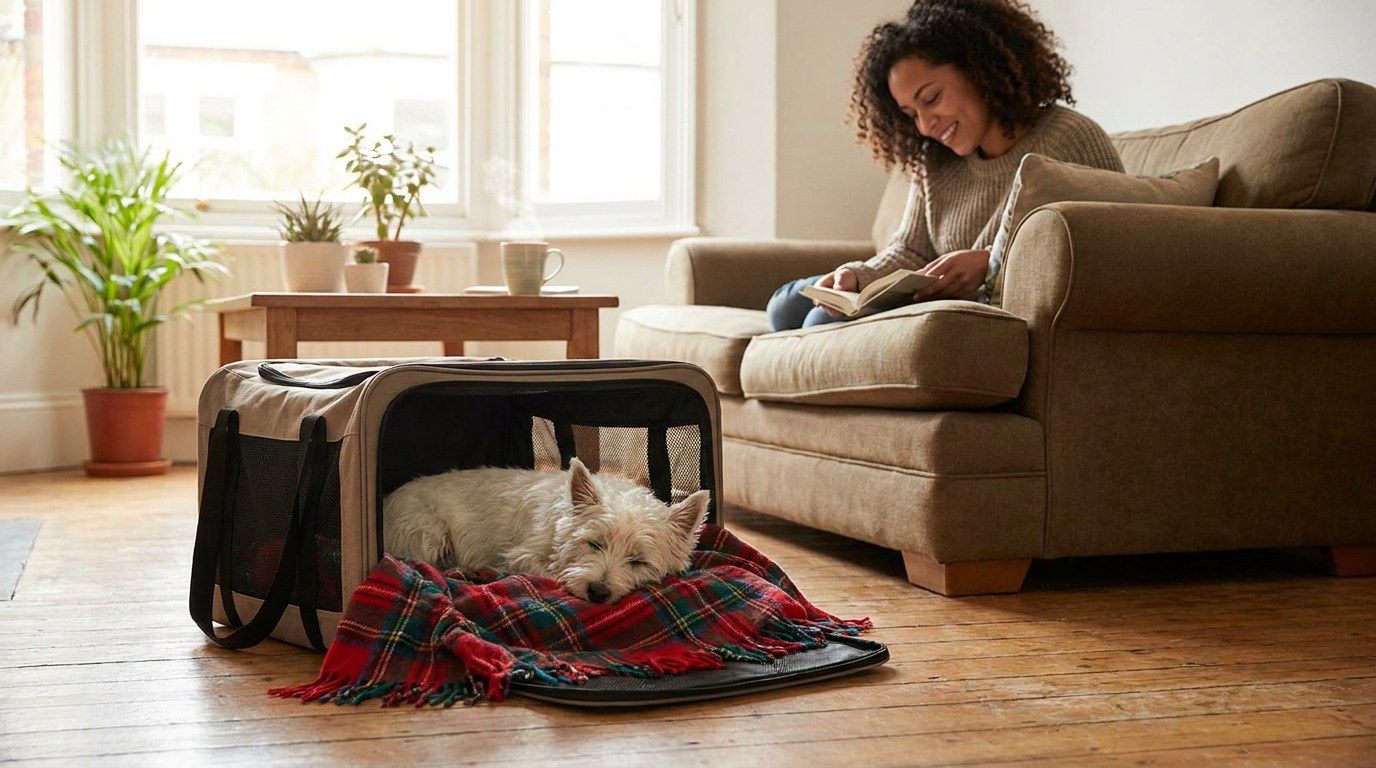
WayFur answer
Usually, no. American Airlines says it does not accept sedated pets, Delta says sedation is not permitted for the pets it ships, Air Canada and WestJet say not to give tranquilizers or other medication without talking to a vet, and IATA advises against sedating dogs and cats that fly in the cabin. If your vet does prescribe something for the trip, check that your airline allows it, tell the airline, and carry the vet's paperwork.
This article isn't veterinary advice. Talk to your vet before giving your pet any medication for travel.
What airlines say about sedated pets
Say you are flying from Montreal to Calgary to see family, and your small terrier is coming in the cabin. It is her first flight, she gets jumpy in new places, and a friend suggests asking for something to make her sleep through it. Before that conversation goes any further, read what the airlines publish.
American Airlines is the clearest. It says that, as recommended by the AVMA, it does not accept pets that have been sedated or tranquilized, and it gives its reason: it says such pets are at higher risk of respiratory and cardiovascular problems at high altitude. American Airlines Cargo adds that it will not knowingly accept a dog or cat that has been, or appears to have been, sedated.
Delta's pet shipping page says the sedation of household dogs and cats is not permitted, and that this includes any medication that causes sedation of the pet.
The two big Canadian airlines put it as advice to talk to a vet. Air Canada says tranquilizers and other medications are not recommended and tells you to consult your veterinarian. WestJet says you should not give your pet any tranquilizer or other medication before travel without first consulting a vet.
Practical tip
Airlines word this differently, and the policy that counts is the one on your ticket. Read it before you book, and ask the airline if it is unclear.
Where this comes from
Sourced from the American Airlines and American Airlines Cargo pet pages (both read October 6, 2026), Delta's pet shipping page, and the Air Canada and WestJet pet pages, checked October 6, 2026.
What IATA's guidelines say
IATA, the airline industry body, covers sedation in two documents. Its guidance for passengers says sedation or tranquilization is advised against for dogs and cats in the cabin, because tranquilizers reduce an animal's ability to respond to the stress of travel. If such drugs are given, it says, they must be under a vet's direction, the airline should be told, and airlines may refuse a sedated pet at their discretion.
Its July 2026 operational guidelines turn that into a check-in step. Airlines are asked to tell passengers that sedation is discouraged unless a vet prescribed it, with documentation required. Check-in staff confirm with the owner that the pet has not been sedated, or, if it has, that the paperwork is there. IATA's example is a form called a Record of Administration. Staff are also asked to assess whether the pet seems excessively lethargic or unresponsive, and the guidelines say boarding must be denied if the animal appears unwell.
In plain terms, IATA's position is no sedation unless a vet prescribed it, and paperwork at check-in if one did. Our guide to flying with a pet in the cabin covers the rest of the July 2026 guidelines.
Where this comes from
Sourced from IATA, Guidance for Passengers Traveling with their Dog or Cat in the Cabin, and IATA Operational Guidelines for In-Cabin Pet Transport, Edition 1, sections 2 and 3.1. Checked October 6, 2026.
What the AVMA says
The American Veterinary Medical Association gives pet owners one instruction on this: "Consult your veterinarian before giving your pet any tranquilizers or sedatives." Its travel page adds that these drugs can increase the risk of heart or respiratory problems and are generally not allowed by airlines.
The AVMA's wider advice for a nervous traveller points the same way. It suggests talking to your vet about how to make the trip as safe and comfortable as possible for your pet, and asking your vet about feeding before, during and after a flight.
So for the terrier, the next step is a vet appointment. Her vet knows her health history and is the right person to talk the flight through with.
Where this comes from
Sourced from AVMA, Traveling with your dog or cat. Checked October 6, 2026.
Getting a dog ready to fly without medication
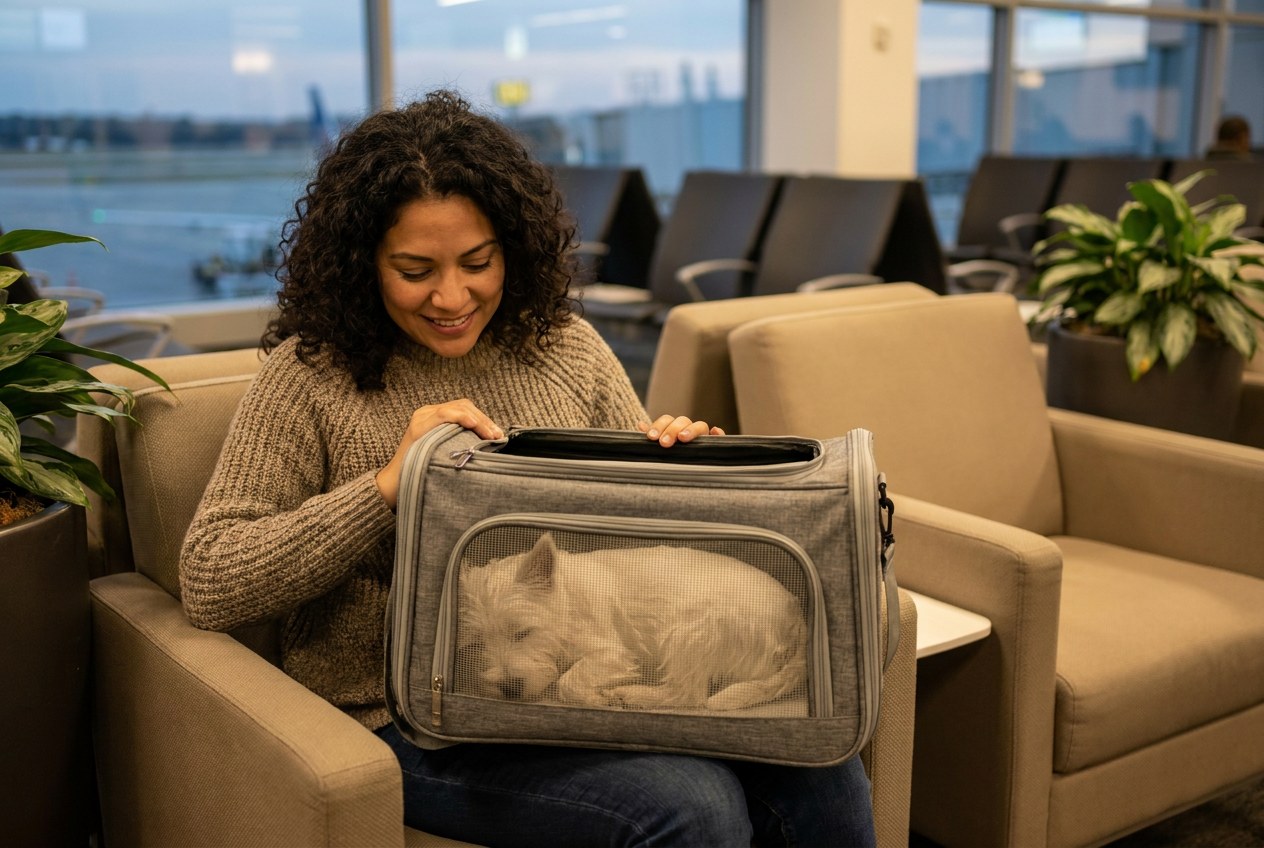
The sources above agree on one thing you can start at home: getting your dog used to the carrier. IATA's passenger guidance says dogs and cats should be introduced to their carrier well before the journey, so being shut inside it on the day is less stressful. The AVMA suggests putting a familiar toy or blanket in the carrier. American Airlines Cargo calls getting your pet used to its travel container, as far ahead of the trip as possible, its recommended alternative to sedation, and passes on vets' advice to leave it open at home with a chew or other familiar things inside.
For the terrier, that looks like weeks of the carrier sitting open in the living room, her blanket inside, until she naps in it on her own. If you are still choosing one, our guide to airline-approved pet carrier sizes lists each airline's limit.
Practical tip
A few more steps come straight from the same guidance. IATA notes that animals prefer dim light, which helps calm them. The AVMA suggests exercising your pet before you enter the airport, if appropriate, and, for a pet flying in the cabin, checking in as late as you can so less time is spent in the busy terminal.
Where this comes from
Sourced from IATA's passenger guidance, AVMA, Traveling with your dog or cat, and American Airlines Cargo's sedation policy. Checked October 6, 2026.
If your vet does prescribe something
If your vet decides medication is right for your dog and this trip, three things follow from the published rules. First, check that your airline accepts it at all, because American does not accept sedated pets and Delta does not permit sedation for the pets it ships. Second, tell the airline before you fly, as IATA's guidance expects. Third, carry your vet's paperwork to check-in, since staff are asked to confirm it.
Leave every decision about the medicine to your vet, and confirm the final details with your airline before you travel.
Put in your route, date and dog, and a free readiness check shows the entry requirements for your trip, each with its source. Check your airline's own pet page before you talk it through with your vet.
Sources
- American Airlines: Pets
- American Airlines Cargo: Pets and Animals, Policies and Restrictions
- Delta Air Lines: Shipping your pet
- Air Canada: Travelling with pets
- WestJet: Travelling with pets
- IATA: Guidance for Passengers Traveling with their Dog or Cat in the Cabin
- IATA: Operational Guidelines for In-Cabin Pet Transport (Edition 1, July 2026)
- American Veterinary Medical Association: Traveling with your dog or cat
Common questions
Can you sedate a dog for air travel?
Some airlines don't allow it. American Airlines says it does not accept sedated pets, Delta's pet shipping page says sedation is not permitted, and IATA says any airline may refuse a sedated pet at its discretion. Air Canada and WestJet tell you to consult a vet before giving any tranquilizer or medication. Check your own airline's policy before you book.
Can I give my dog a sedative for flying in the cabin?
Not on your own. IATA advises against sedation for pets in the cabin, and the AVMA says to consult your veterinarian before giving any tranquilizer or sedative. Talk to your vet, and follow your airline's rule.
What can I do about my dog's anxiety before a flight?
Start with the carrier. IATA and the AVMA both suggest getting your dog used to it well before the trip, with a familiar blanket or toy inside. The AVMA also suggests exercise before you reach the airport. Your vet can help with a plan for your dog.