
GuidesRoad trips with pets
How to road trip with a dog in 2026: plan the whole drive, from the route to arrival
A long drive with a dog passes through every province, city and border between you and the destination, and each can have its own rules. Plan it in order: the route, the border, the car, the stops, the nights and the place you arrive.
WayFur editorial
6 min readPublished Last checked
WayFur answer
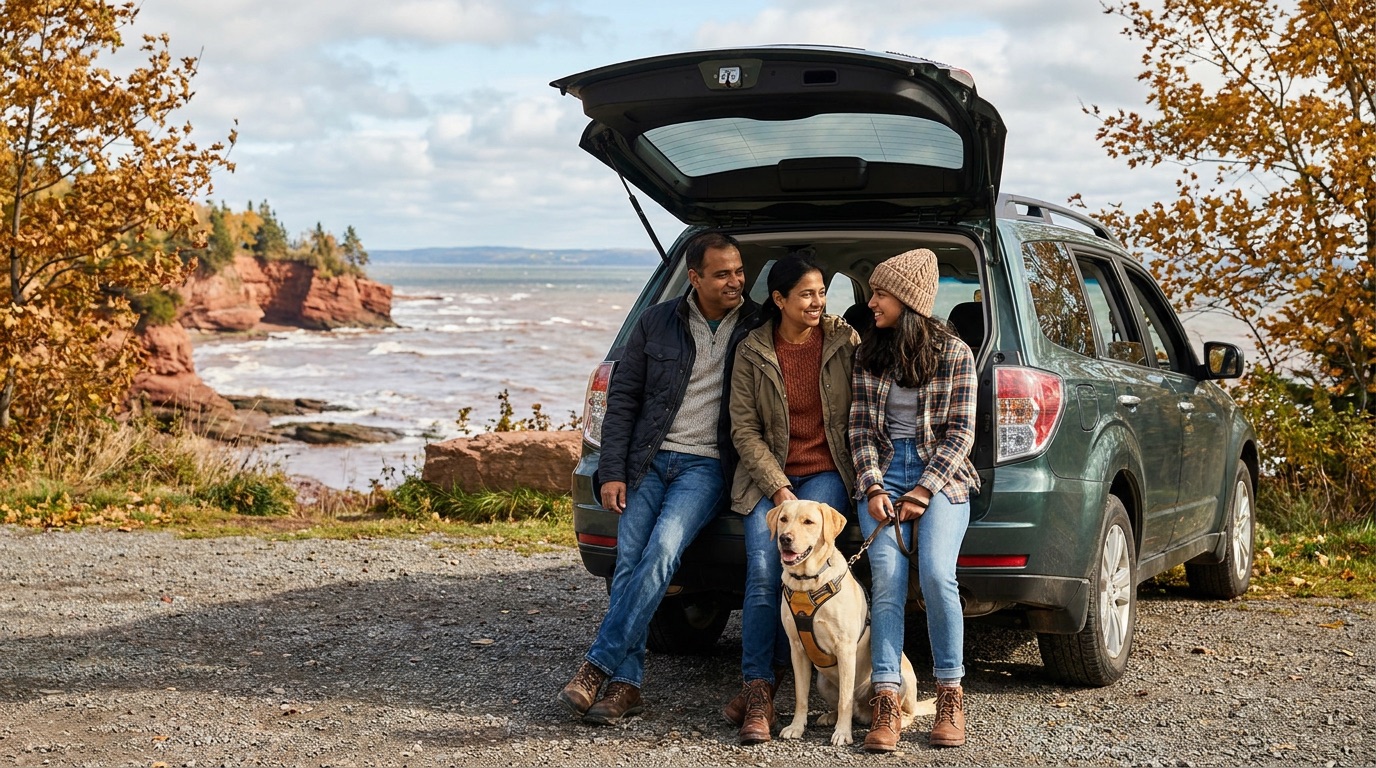
Plan a road trip with a dog in the order you will drive it. Check the rules of each province and city on the route, the paperwork for any border you cross, how your dog rides and is never left in the car, where your dog can go at each stop, a stay that takes your dog by weight and breed, and the rules where you arrive. Most of these rules are set by provinces and cities, so they can change partway through the drive.
Plan the drive in the order you will drive it
Say your family is driving from Halifax to Toronto with Biscuit, a 32 kg Labrador mix, over three days. The drive crosses Nova Scotia, New Brunswick, Quebec and Ontario, and each one sets some of its own rules for dogs. A good plan takes the trip in order:
- The route, and the rules of each place you pass through
- Any border you cross on the way
- The car, and never leaving your dog in it
- Daytime stops, and where your dog can go
- The nights, and a stay that takes your dog
- Arrival, and the rules where you stay
For how often to stop and what to bring for each break, see our guide to how often to stop on a road trip with a dog. This guide covers the rest of the drive.
1. The route: the rules move with you
Dog rules in Canada are often set by a province or a city, so they can change when you cross a line on the map. Quebec is a good example for a dog Biscuit's size. Its dog regulation says that in a public place, a dog must be on a leash no longer than 1.85 m, and "A dog of 20 kg and more must also wear, at all times, a halter or a harness attached to its leash." That covers rest areas, gas stations and town streets on the Quebec stretch of the drive, so a 32 kg dog on a flat collar needs a harness for that part of the trip.
Breed law changes at provincial and city lines too. Ontario bans pit bull-type dogs province-wide, including bringing one into the province. If your dog is a bully breed, our guide to travelling with a pit bull-type dog in Canada covers where the rules apply.
Easy to miss
The Quebec harness rule goes by weight, not breed. Any dog of 20 kg or more needs a halter or harness on its leash in a public place, except in a dog run or during dog activities such as training or shows.
Where this comes from
Quebec's Regulation respecting the application of the Act to promote the protection of persons by establishing a framework with regard to dogs, section 20, last checked on October 13, 2026. The Ontario breed rule is from the Dog Owners' Liability Act and O. Reg. 157/05. Both are in WayFur's verified policy records, last verified in July and October 2026.
2. Crossing a border on the way
If your route dips into the United States, even for a few hours, your dog enters the US and then comes back into Canada, and each side has its own paperwork.
- Into the US. For a dog that has been only in Canada or another low-risk country for the past 6 months, the CDC asks for one thing on paper: the free CDC Dog Import Form, done online, with a receipt for each dog. The dog must be at least 6 months old, have a microchip a universal scanner can read, and look healthy. These dogs "can enter the U.S. at any airport, seaport, or land border crossing." Our guide to the CDC dog import form covers the form step by step.
- Back into Canada. USDA APHIS says a dog older than 8 months needs proof of rabies vaccination to enter Canada and no health certificate. Puppies have their own rules, covered in our guide to bringing your dog into Canada from the US.
Where this comes from
The CDC's page on dogs from rabies-free or low-risk countries, and USDA APHIS's page on pet travel from the United States to Canada, both last checked on October 18, 2026. Both are in WayFur's verified entry rules.
3. The car: never leave your dog in it
Plan every stop so your dog is never alone in a parked car. Parks Canada tells visitors "do not leave your pet unattended in a vehicle," and some provinces back that with law. In New Brunswick, an animal protection officer can force entry into a vehicle to help an animal that is confined in it and in distress, or kept without reasonable protection from heat or cold. Manitoba and Ontario have their own rules, and our guide on how often to stop covers them, along with how to restrain your dog between stops.
On a family trip, that means one adult stays with the dog at every gas or food stop, or the dog comes too.
4. Daytime stops: where your dog can go
National parks are some of the best stops on a long drive, and both countries let dogs in with rules.
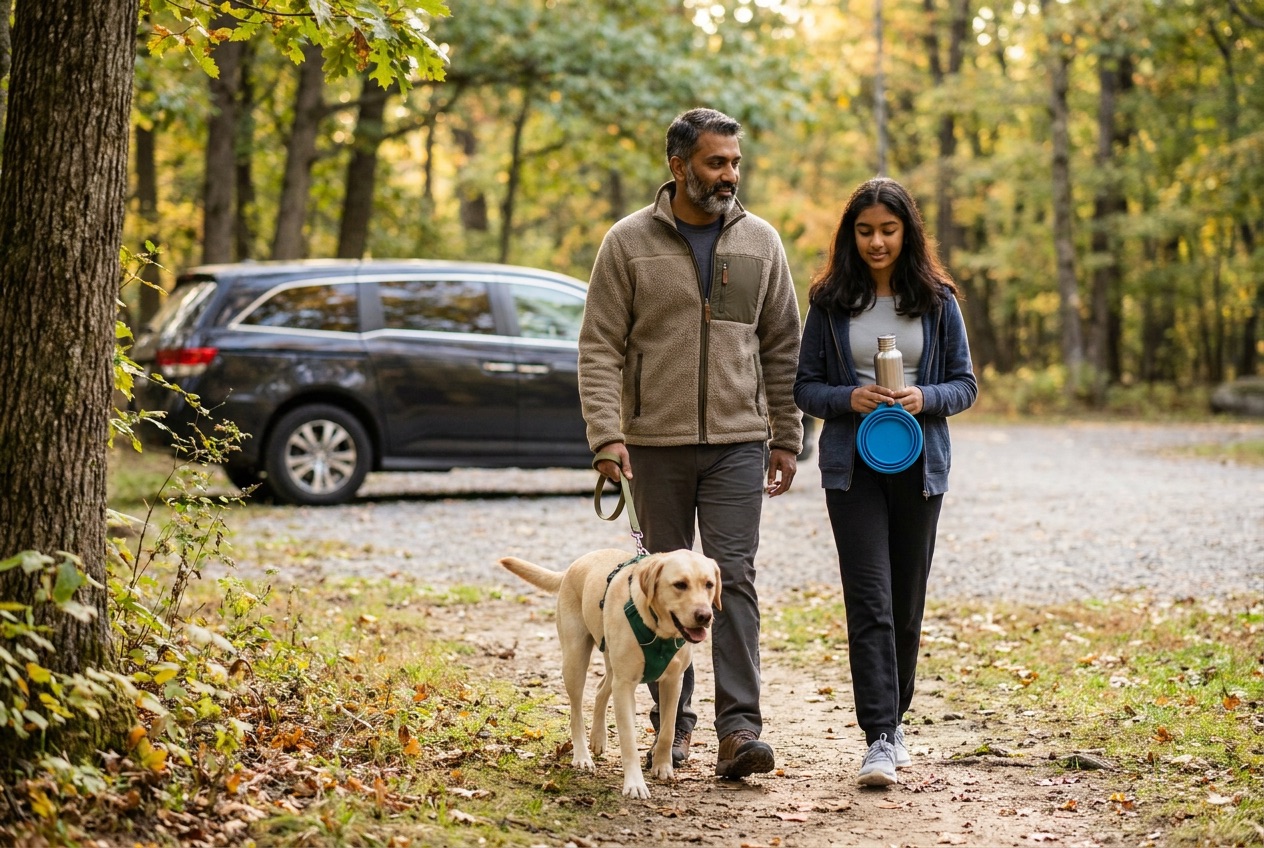
- Parks Canada. Dogs "must be on a leash that measures 3 metres or less," and under control, in every Parks Canada place, and the agency calls it the law. Some areas are closed to pets, so check the park website or a visitor centre for trail restrictions before you walk. Parks Canada suggests leaving your dog at home if you plan to camp, hike or go into the backcountry.
- US national parks. The National Park Service says national parks welcome pets in developed areas, on many trails and campgrounds and in some lodging, with rules set park by park. Its B.A.R.K. principles sum them up: bag your pet's waste, always leash your pet, respect wildlife, and know where you can go.
In Quebec, the harness and 1.85 m leash rule applies at every public stop, parks included.
Where this comes from
Parks Canada's page on dogs in its protected places, the National Park Service's pets and B.A.R.K. Ranger pages, all last checked on October 13, 2026. The New Brunswick vehicle rule is from the Animal Welfare Act, in WayFur's verified policy records.
5. The nights: book a stay that takes your dog
Choose the towns where each driving day ends, then read each hotel's own pet policy before you book: the weight limit, how many pets a room takes, and the pet fee and whether it is charged per night or per stay. Call the hotel to confirm your dog by weight, because chains often let each property set its own pet rules.
When you plan the trip in WayFur (upgrade required), it looks for a pet-friendly stay where each driving day ends and checks the stay's published pet policy against your pet's weight, breed and the number of pets with you.
6. Arrival: the rules where you stay
Rules at the destination matter most on a long stay or a move. Toronto allows no more than three dogs and six cats in one home, and service animals don't count toward the dog limit. If you're moving with more pets than that, check the city's bylaw before you sign a lease. The breed law of the province you arrive in applies for the whole stay.
Practical tip
Keep a short folder in the glovebox with your dog's rabies certificate, the CDC receipt if your route enters the US, and your hotel confirmations. At a border or a front desk, it saves digging through the luggage.
Put in your start, destination, date and pet, and a free readiness check lists the entry requirements for your trip and the breed laws where it starts and ends, with each border's source.
Sources
- Government of Quebec (LegisQuebec): Regulation respecting the application of the Act to promote the protection of persons by establishing a framework with regard to dogs, P-38.002, r. 1
- Government of New Brunswick: Animal Welfare Act
- City of Toronto: Toronto Municipal Code, Chapter 349, Animals
- Government of Ontario (e-Laws): Dog Owners' Liability Act, R.S.O. 1990, c. D.16
- Government of Ontario (e-Laws): O. Reg. 157/05, Pit Bulls
- Centers for Disease Control and Prevention: Bringing a dog into the United States
- Centers for Disease Control and Prevention: Entry requirements for dogs from dog-rabies free or low-risk countries
- USDA APHIS: Pet travel from the United States to Canada
- Parks Canada: Dogs in Parks Canada's protected places
- US National Park Service: Pets
- US National Park Service: Be a B.A.R.K. Ranger
Common questions
How do you road trip with a dog?
Plan the drive in order: the rules of each province and city on the route, any border paperwork, how your dog rides and never stays alone in the car, where your dog can go at each stop, a stay that takes your dog by weight and breed, and the rules where you arrive. Then set a pace with regular breaks for your dog.
Can you road trip across Canada with a dog?
Yes. Plan for the rules changing as you go. Quebec requires a halter or harness for any dog of 20 kg or more on a leash no longer than 1.85 m in a public place, Ontario bans pit bull-type dogs province-wide, and Parks Canada requires a leash of 3 metres or less in all its parks. If the route crosses into the United States, the dog also needs US and Canadian entry paperwork.
What do I need to bring my dog into Canada by car?
USDA APHIS says a dog older than 8 months needs proof of rabies vaccination to enter Canada, and no health certificate. Younger puppies have their own rules, so check the requirements for your dog's age before the trip.
More like this
See all guides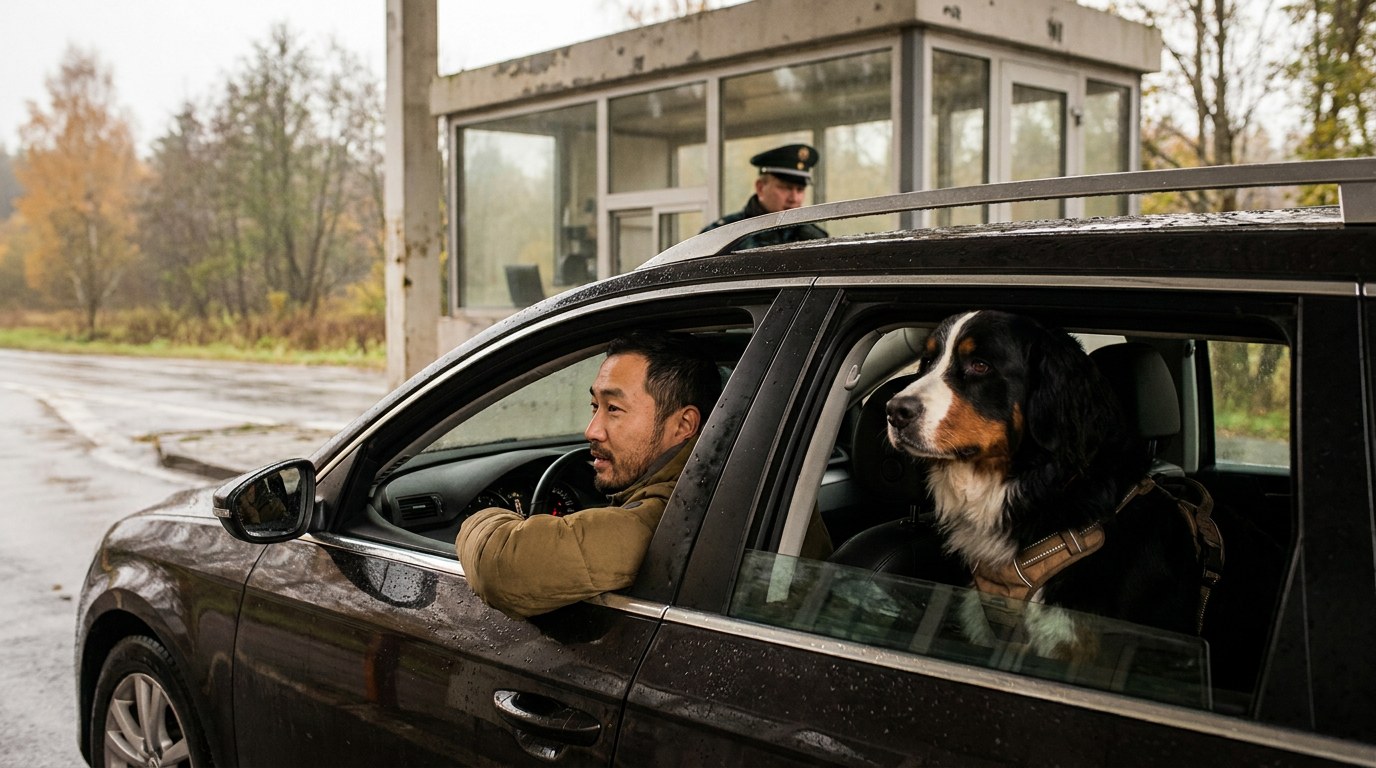 Driving across the Canada-US border with a dog or cat in 2026: what officers checkGoing south, a dog needs a CDC Dog Import Form receipt and a cat needs no federal paperwork. Coming home, Canadian officers want a valid rabies certificate that matches your dog or cat. What to have in the car for each pet.
 The CDC Dog Import Form from Canada in 2026: one receipt, six monthsEvery dog entering the US from Canada needs a CDC Dog Import Form receipt, a microchip and to be at least 6 months old. The form is free, and one receipt can cover repeat trips from Canada for six months.
 Bringing your dog into Canada from the US in 2026: what CFIA asks forFor most adult pet dogs, CFIA asks for one thing at the border: a valid rabies vaccination certificate. Puppies, dogs travelling without you, and dogs you plan to give away or foster follow different rules. Each case, flying or driving.