Guides / Border rules & documentation
Wintering in the US with your pet: a snowbird's guide
Spending the winter in Florida, Arizona or elsewhere in the US with a dog or cat? What the border asks for going down, what your winter state may ask for, and what Canada wants when you come home in spring.
Border rules & documentation · Published · Last checked

WayFur answer
To spend the winter in the US with your pet, a dog needs a CDC Dog Import Form receipt, a microchip and an age of at least 6 months, while a cat needs no federal documents, only to look healthy on arrival. Your winter state can add its own rules, and Florida, for example, asks for a current rabies vaccination for dogs and cats 3 months or older. Canada asks for a valid rabies certificate when you drive home in spring, so check that each pet's certificate will still be valid on your return date.
Crossing into the US with a dog and a cat
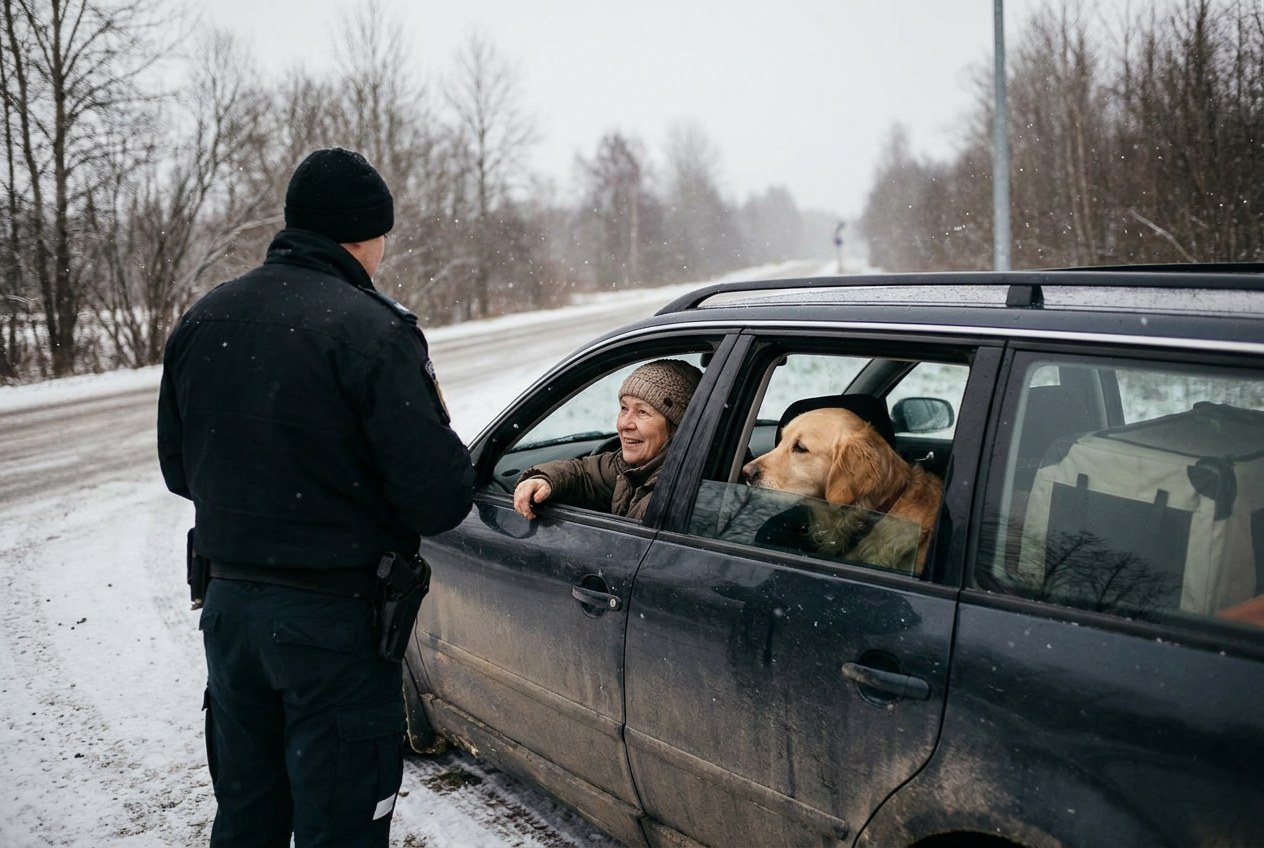
Say you are newly retired in Ottawa, and this is the year you finally spend November to April near Fort Myers. You are driving, with your seven-year-old golden retriever and your cat, and you plan to come home for two weeks at Christmas.
The dog needs a CDC Dog Import Form receipt. Canada is a low-risk country for dog rabies, so CDC's requirements are short: the receipt, an age of at least 6 months on the day of entry, "a microchip that can be detected with a universal scanner," and a healthy appearance. The form is free, you can complete it on the day you travel, and you show the receipt, printed or on your phone, to US Customs and Border Protection at the crossing.
The cat is simpler. "Cats are not required to have proof of rabies vaccination for importation into the United States," CDC states, and there is no import form for cats. CDC does require that cats appear healthy on arrival, and tells travellers to check with officials in the state of final destination.
Who asks for what over a snowbird season (Florida example)
| Layer | Dog | Cat |
|---|---|---|
| US border (CDC), going down | CDC Dog Import Form receipt, microchip readable by a universal scanner, at least 6 months old on the day of entry, healthy on arrival | No rabies proof, health certificate or import form; healthy on arrival |
| Florida (FDACS) | Current rabies vaccination at 3 months or older; 30-day health certificate does not apply to a privately owned pet travelling with its owner | Same as dogs |
| Canada (CFIA), coming home | Valid rabies vaccination certificate at 3 months or older; no health certificate for a dog older than 8 months | Valid rabies vaccination certificate at 3 months or older |
Making one receipt last the winter
For a dog from a low-risk country, CDC says "The receipt is valid for one dog to enter the United States multiple times from the same country within six months from the date of issuance." You need it each time you enter the US, so what matters is that every crossing south falls inside those six months.
Fill in the form close to your first crossing in early November, and the six months run into early May. The drive back south after Christmas falls well inside that window, so the same receipt covers the second entry. Fill it in in August to get it off your list, and it runs out in February: fine for a January return, but not for a later trip home and back.
Easy to miss
The receipt ends early if your dog visits a different country or any high-risk country. A spring cruise or a side trip abroad with the dog means a new receipt listing that country.
Our guide to the CDC Dog Import Form covers the details.
What your winter state may ask for
Federal entry is one layer. States set their own rules for dogs and cats, which is why CDC tells you to check with your destination state.
In Florida, the Department of Agriculture and Consumer Services asks for "A current rabies vaccination, if the pet is 3 months of age or older." It also requires a health certificate issued within 30 days, "unless the pet is privately owned and traveling with its owner." For your Fort Myers winter, the dog and cat both need current rabies vaccinations, and a privately owned pet driving down with you falls under that exception.
Easy to miss
Florida's page also carries a screwworm notice for animals originating from infested zones. Read it if your pets have spent time in an affected area before arriving.
If you winter in Arizona, Texas or another state, look up that state's agriculture department page before you go, because the rules are not the same everywhere.
Easy to miss
A winter in Arizona can tempt you into a day trip across the border into Mexico with your dog. Plan for screwworm certificates in both directions: Mexico requires one for dogs arriving from the US, and the US requires its own for dogs coming back from Mexico. See taking your dog to Mexico for the way in.
Where this comes from
Sourced from CDC, Dog Import Form Instructions (updated April 28, 2026), CDC, Entry Requirements for Dogs from Dog-Rabies Free or Low-Risk Countries, CDC, Bringing an Animal into the U.S. (updated August 22, 2025), and Florida Department of Agriculture and Consumer Services, Dog and Cat Movement Requirements. All checked October 6, 2026.
Coming home to Canada in spring
In April, the CFIA wants a valid rabies vaccination certificate for a dog or cat 3 months or older. For a dog, the certificate has to show the vaccination date and how long the vaccine is valid. If it does not say, Canada treats it as valid for 1 year from the vaccination date. A dog older than 8 months needs no health certificate to enter Canada, according to USDA APHIS.
The date to check is the April one. A rabies certificate that is valid in October can run out in February.
Practical tip
Before you leave home in the fall, compare the expiry date on each pet's rabies certificate with your return date. If it falls inside the winter, talk to your vet about timing before you go, or plan a visit to a licensed vet in the US while you are there, so the certificate you carry home is valid on the day you cross.
Our guide to Canada to US pet entry rules sets out how the two directions differ.
Where this comes from
Sourced from CFIA, Importing and travelling with pets, and USDA APHIS, Pet Travel From the United States to Canada (updated July 30, 2025). Both checked October 6, 2026.
The drive down
A drive to Florida means several nights in motels along the way, and a pet-friendly label tells you little on its own. Properties set weight caps, breed conditions and nightly pet fees, and a listing rarely shows them. A large dog can be over a property's weight cap even when the listing says pet-friendly, so check each overnight stop's own policy before you book it. Our guide to pet-friendly stops on a long drive covers what to look for, and if you would rather fly, Toronto to Miami with a dog covers the airline side.
Enter your route, your travel dates and your pets, and a free readiness check shows the US entry rules going down and the Canadian rules coming home, each with its source and the date it was last checked. State rules such as Florida's are not part of the check, so confirm those with your state.
Sources
- USDA APHIS: Pet Travel From the United States to Mexico
- CDC: Dog Import Form Instructions
- CDC: Entry Requirements for Dogs from Dog-Rabies Free or Low-Risk Countries
- CDC: High-Risk Countries for Dog Rabies
- CDC: Bringing a Dog into the United States
- CDC: Entry Requirements for U.S.-Vaccinated Dogs from High-Risk Countries (source of core_entry_rules 43)
- CDC: Bringing an Animal into the U.S.
- Florida Department of Agriculture and Consumer Services: Dog and Cat Movement Requirements
- CFIA: Importing and travelling with pets
- USDA APHIS: Pet Travel From the United States to Canada
Common questions
How do I travel with a dog from Canada to the USA?
Fill in the free CDC Dog Import Form online and carry the receipt. Your dog also needs a microchip a universal scanner can read, must be at least 6 months old on the day it crosses, and must look healthy. Your destination state may add rules: Florida, for example, asks for a current rabies vaccination for dogs 3 months or older. Canada asks for a valid rabies certificate when you come home. Confirm each rule with CDC, your state and CFIA before you travel.
What do I need when traveling with a cat from Canada to the US?
Nothing for the CDC: cats need no proof of rabies vaccination or health certificate to enter the US, but must look healthy on arrival. Your winter state may ask for rabies vaccination, as Florida does for cats 3 months or older, and Canada asks for a valid rabies certificate for a cat 3 months or older on the way home.
How long is the CDC Dog Import Form good for?
From Canada, six months from the date it is issued, for multiple entries from Canada, as long as your dog has not visited another country in that time. If you come home for Christmas and drive back south in January, the same receipt covers it. Fill it in close to your first crossing so the six months cover every entry this season.